Level 2 EV Charger Installation in Caledon
Matched to your circuit and your car, a Level 2 charger banks roughly 30 to 50 km of range for every hour it runs, enough to refill the battery while you sleep. On an acreage where the nearest errand is a drive away and the commute toward Brampton is real, that overnight fill is what turns range anxiety into a full car at the gate each morning.
Published
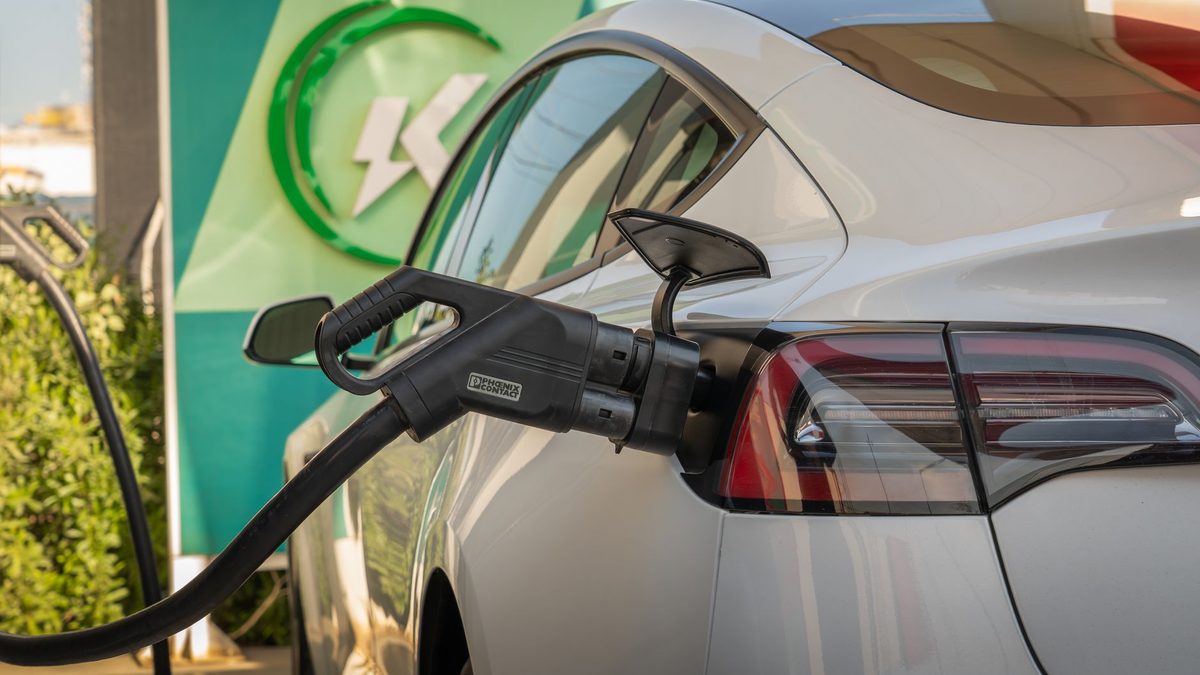
For a property in Caledon, Level 2 is the charging setup that actually fits country living. Caledon EV Charger Pros installs these across the town, and the case is simple: you leave the slow wall plug behind and gain a dedicated 240-volt circuit that tops the battery up every night. That matters more out here than in the city, because Caledon driving means real distance, a commute toward Brampton or Mississauga, runs into town, and errands that add up. This guide covers the speed, the rural-property considerations, and what a tidy install looks like when the car parks well back from the panel.
The run to where you actually park
On a Caledon home the first thing we work out is not the unit, it is the path the cable takes. Plenty of properties park at a detached garage, workshop, or gravel pad a long way from the house panel. That feed often gets trenched across the yard in conduit, sized heavier than a short run to manage voltage drop over the distance. Getting this right is the heart of a rural install, which is why we map your property layout before quoting.
Level 1 versus Level 2 for a Caledon commute
The cord packed with the car plugs into an ordinary outlet and recovers only a handful of kilometres an hour, fine if you barely drive and useless on acreage where the nearest anything is a drive away. A Level 2 charger on a dedicated 240-volt circuit returns far more, roughly 30 to 50 km of range an hour depending on your car and the breaker we run, so a single overnight session covers a full day of Caledon driving with room to spare. For a household that drives real distances, that gap is the whole reason to install Level 2.
Hydro One service and panel capacity
Most Caledon homes are served by Hydro One rather than a city utility, and a good share sit on older or rural services with their own quirks. A well pump, a septic system, electric heat, and a large range can already lean on the panel. So before any charger goes in, we run a load calculation that measures your real demand against the service rating. If there is headroom, the charger drops in cleanly. If the panel is tight, a panel upgrade or a smart charger with load management keeps everything within safe limits.
Detached garages and outbuildings
The building the car sleeps next to sets the shape of the whole job. An attached garage with the panel an arm's length away is short and simple. A barn, workshop, or detached garage set back across the property means the feed has to travel, often landing on a small subpanel at the far end so the charger circuit terminates cleanly rather than dragging one long home run back. We carry that wire in conduit where it is exposed, drop it to code depth where it crosses lawn or paddock, and seal it where it enters the outbuilding.
Sizing the charger to your car
The wall unit is rarely the bottleneck. What governs how fast your battery fills is the onboard charger built into the car, and on nearly every EV that figure sits in the 32 to 48 amp band. So we work backward from your vehicle: pick the breaker and the unit that feed it right up to that limit and no further, because amps the car will never accept are amps you paid to trench out for nothing. The full Level 2 service page lists the units we install, and if you drive a Tesla, our Tesla Wall Connector page covers that setup.
Hard-wired or plug-in
The charging speed is the same either way, so this comes down to how the unit lives on your property. Hard-wiring it straight into the circuit is the cleaner permanent answer and unlocks the higher amperage some units offer, which is what you want for a charger bolted to a barn wall or a shop it is never leaving. A plug-in unit fed from a dedicated NEMA 14-50 outlet trades a little of that for the option to pull it off the wall and carry it, handy if you charge at more than one structure across the acreage. We point you to whichever matches the unit you chose and where it sits on the land.
Overnight charging and the rural advantage
The savings hide in the timing. Hydro One puts rural homes on either time-of-use or tiered pricing, and on both the small hours of the night are the gentlest the meter ever runs. Schedule the charger to wake up once that low window opens and the battery fills overnight at the cheapest power the property buys all day. On an acreage that is already feeding a well pump and electric heat off the same Hydro One service, shaving the car onto that off-peak rate adds up to real money across a Caledon winter. Pull up your own Hydro One rate plan for the exact windows, since the hours shift over time.
One car ahead, while the trench is open
On an acreage the lesson is written in the dirt: almost everything costly about a rural charger is the digging and the buried feed, and once that conduit is closed over and the lawn has grown back, opening it again is the job nobody wants to pay for twice. So when a household looks likely to add a second EV, the move is to settle the heavier feed and a power-sharing unit on this dig rather than the next one. A wider conduit and a few spare panel positions barely move the figure while the trench is still open. We flag those calls at the assessment, because the saving is not in the parts, it is in never bringing the excavator back.
What to send before requesting a quote
- Your EV model, so we size the circuit correctly
- A photo of your panel with the door open
- A photo of the parking spot and the proposed charger location
- Whether the charger is at the house or a detached structure, and roughly how far
Wondering how the feed reaches your detached garage and what it costs? Lay out the details for the Caledon EV Charger Pros team on our free quote form and we will send back a fixed price along with a mapped-out plan for the run, trench and all, no matter how much acreage sits between the panel and the pad.
Frequently asked
How fast is a Level 2 charger on a Caledon property?+
A Level 2 charger adds roughly 30 to 50 km of range an hour, with where you land set by your car and the breaker size we run. For most Caledon drivers that means a full battery by morning, even after a long rural commute toward Brampton or Mississauga and the usual errands around town.
Can a Level 2 charger reach my detached garage in Caledon?+
Yes. We routinely run a feed from the house panel to a detached garage, workshop, or barn, usually trenched underground in conduit at code depth. A long run uses a heavier wire gauge to manage voltage drop over the distance, and sometimes a small subpanel at the far end. Tell us the distance and we will plan the route.
Will Level 2 work with my Hydro One service?+
Often yes, but it depends on your service and existing loads. Many Caledon homes are on Hydro One with a well pump, septic, and electric heat already drawing power, so a load calculation checks whether there is room for the new circuit. If not, a panel upgrade or a load-managing smart charger keeps you within safe limits.
Do I need a 200-amp service for Level 2 in Caledon?+
Not necessarily. Plenty of 100-amp rural homes run a Level 2 charger once a load calculation confirms the headroom against your heating, well pump, and range. A smart charger that manages load can also make a 100-amp service work safely without a full upgrade.
How long does a Level 2 install take on a rural Caledon home?+
An attached-garage job with a short run often finishes the same day in a few hours. A long trenched run to a detached garage or outbuilding takes longer, since the digging and the buried conduit add time. If a panel upgrade is involved, we flag the extra time before starting so nothing surprises you.